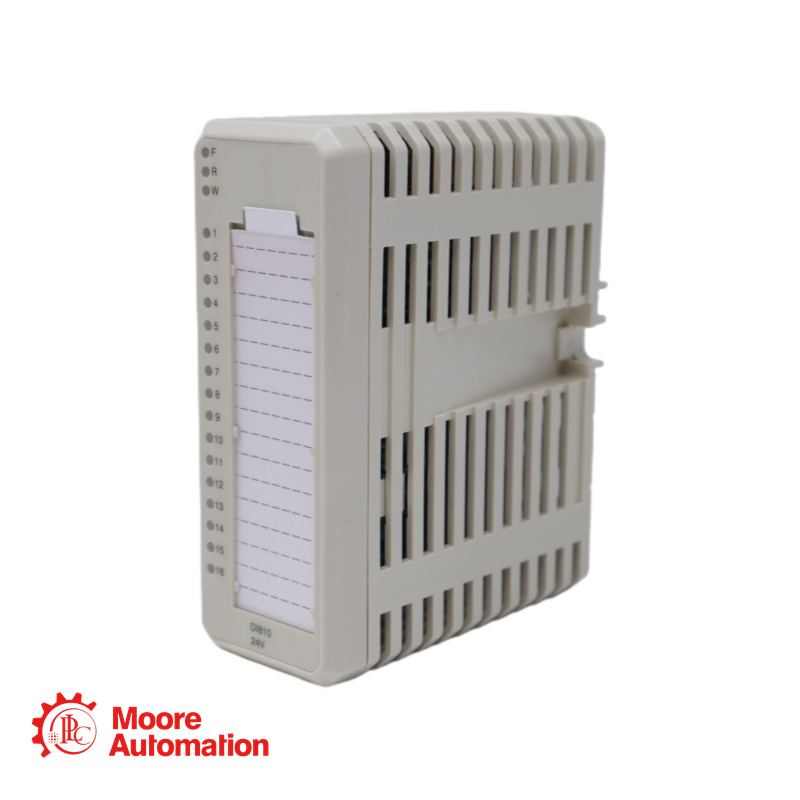
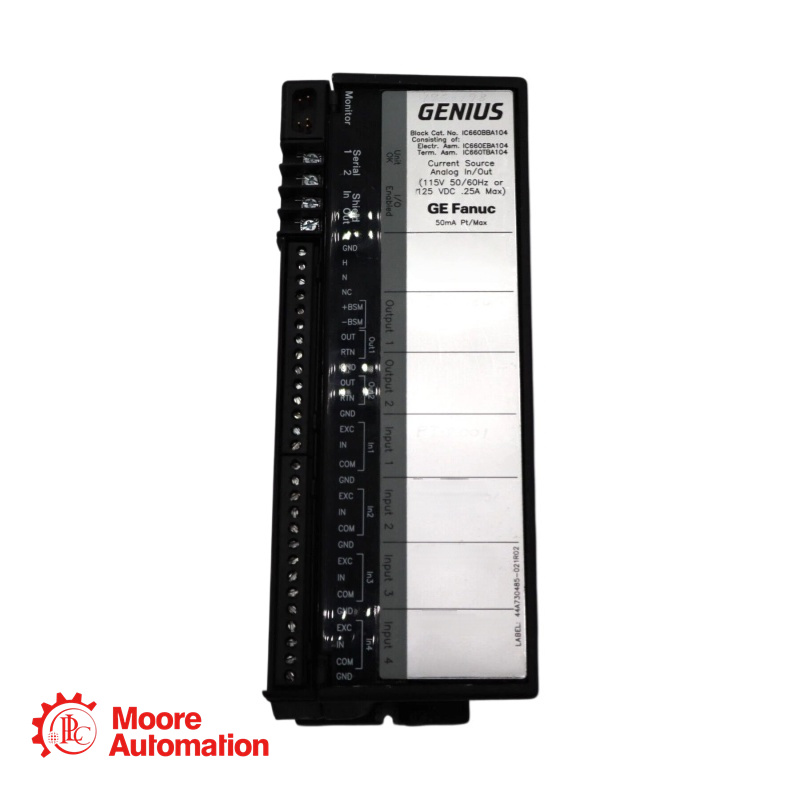
Yokogawa ADV869-P00 S1
Built for the ST5-compatible arrangement. Its grouping and common-minus design must be matched to the existing field wiring and system records.
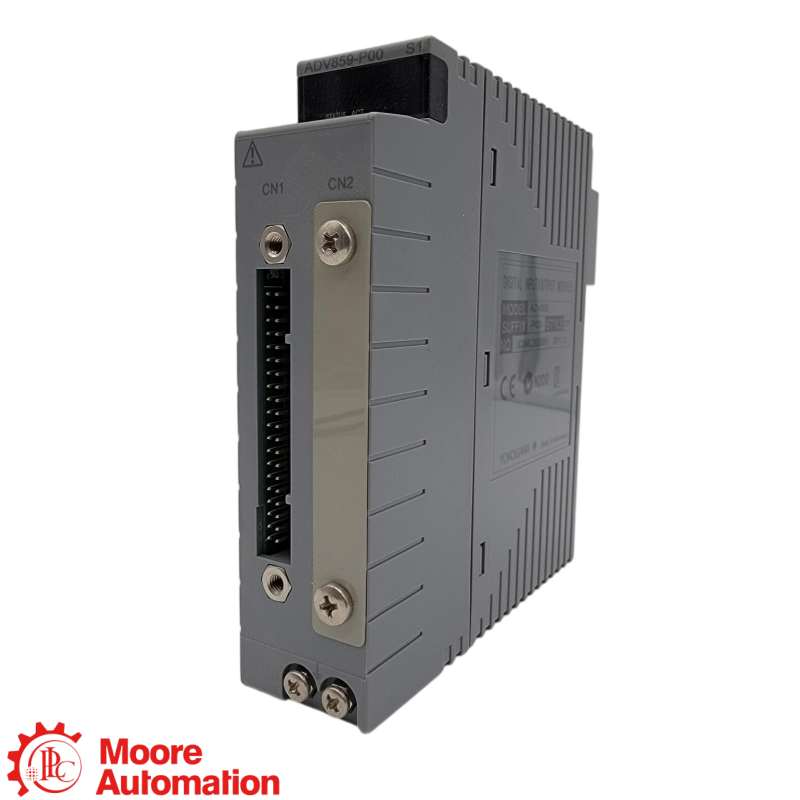
Two Yokogawa modules can share a similar name, enclosure and digital I/O role yet belong to different CENTUM-ST-compatible architectures. The detail that prevents an expensive maintenance error is not the word “ADV”—it is the complete relationship between channel count, isolation, compatible card and dedicated cable.
The direct answer is simple: Yokogawa ADV869-P00 S1 and ADV859-P00 S1 should not be treated as interchangeable modules. Yokogawa identifies them as CENTUM-ST-compatible digital I/O modules, but their field-facing architecture is different. ADV859 is designed for an ST2-compatible position with 16 input and 16 output channels. ADV869 is designed for an ST5-compatible position with 32 input and 32 output channels.
Built for the ST5-compatible arrangement. Its grouping and common-minus design must be matched to the existing field wiring and system records.
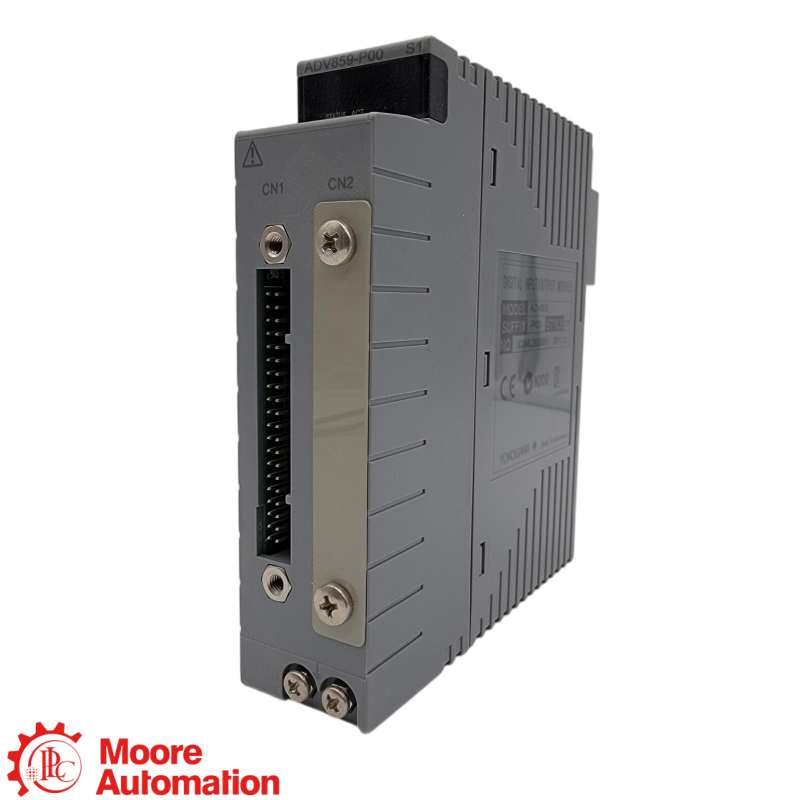
Built for the ST2-compatible arrangement. Its channel-level isolation and KS2 connection are key parts of the installed configuration.
Yokogawa General Specification GS 33J60F70-01EN defines both modules as digital I/O products for compatible CENTUM-ST applications. They receive contact or voltage status signals from the field and provide transistor-contact outputs. The shared function, however, does not remove the differences below.
| Verification item | ADV869-P00 S1 | ADV859-P00 S1 | Why it matters |
|---|---|---|---|
| Compatible card | ST5 compatible | ST2 compatible | Confirms the intended legacy interface and system position. |
| I/O capacity | 32 inputs / 32 outputs | 16 inputs / 16 outputs | Changes the channel map, wiring plan and engineering database. |
| Signal isolation | Common every 16 channels | Isolated channels | Directly affects field commons and isolation strategy. |
| Dedicated cable | KS9 | KS2 | The installed cable must match; visual similarity is not evidence. |
| Status-input response | 8 ms | 8 ms | A shared value does not make the hardware interchangeable. |
| Status-output response | 16 ms or less | 16 ms or less | Confirm the configured point function and application needs. |
| Output contact rating | 30 V DC, 100 mA | 30 V DC, 100 mA | Applicable to inductive or resistive loads; follow Yokogawa wiring guidance. |
| Maximum module current | 800 mA at 5 V DC | 450 mA at 5 V DC | Must be considered in node power and installed-system review. |
The -P00 code identifies the pulse-width/time-proportional output function and basic type in Yokogawa’s model table. The final “1” in the official suffix table denotes the ISA Standard G3 option. Buyers should still match the complete nameplate, including the visible S1 style marking, to the installed record.
Urgent sourcing often begins with a photograph of the front label. That evidence is useful, but it does not show the cable behind the module, the terminal arrangement, the channel assignments or how the engineering database expects the signals to be grouped. This is why a visually correct spare can still be wrong for the plant.
ADV859 uses isolated channels, while ADV869 groups common-minus isolation every 16 channels. This is not a cosmetic distinction. It affects how field circuits are referenced and how technicians should interpret the existing wiring. Replacing one architecture with another without an engineered review can create wiring conflicts, lost signals or unexpected common connections.
Both models publish an 8 ms status-input response and a status-output response of 16 ms or less. A buyer comparing only those numbers could wrongly conclude that the modules are interchangeable. Channel capacity, isolation, compatible card and cable remain decisive. Compatibility is a system relationship, not a single performance number.
These modules are relevant where existing CENTUM-ST-compatible field interfaces must remain connected to a Yokogawa FIO environment. Typical work includes planned shutdown replacement, emergency spare identification, brownfield migration support, cabinet refurbishment and critical-spare standardization.
Use the ADV859 reference when the documented installation requires 16 input and 16 output channels, isolated channels and a dedicated KS2 cable. Confirm the field point schedule and output loads before approval.
Use the ADV869 reference when the documented installation requires 32 input and 32 output channels, common-minus grouping every 16 channels and a dedicated KS9 cable.
Neither description should be used as a substitute for project-specific engineering. Hardware revision, installed system, cable routing, terminal hardware, software configuration and site procedures remain part of a complete replacement decision.
Tick each item as the evidence becomes available. A short verification step before quotation is usually faster than correcting a mismatch during an outage.
The product pages below provide model-specific reference information. Their presence in the catalog does not by itself confirm availability or compatibility with a particular installed system.
No direct interchangeability should be assumed. The models have different channel counts, isolation arrangements, compatible-card identities and dedicated cables. A project-specific engineering review is required.
ADV859 is ST2 compatible with 16 inputs, 16 outputs, isolated channels and KS2 cabling. ADV869 is ST5 compatible with 32 inputs, 32 outputs, common-minus isolation every 16 channels and KS9 cabling.
Yokogawa’s model table defines -P as supporting pulse-width and time-proportional output functions, the first 0 as a fixed code and the second 0 as the basic type. Always verify the complete nameplate and project documentation.
The front label does not show whether the installation uses a KS2 or KS9 cable, nor does it document terminal hardware, field commons or cable condition. Rear and connection photographs shorten the technical review.
Send the complete model, clear front and rear photographs, compatible-card position, cable identity, channel map, quantity, destination and required date. Include system drawings or project records when available.
Primary technical source: Yokogawa Electric Corporation, Digital I/O Modules (for FIO), General Specification GS 33J60F70-01EN, 10th Edition, September 30, 2022. Technical values should be reviewed together with the applicable system manuals and project documentation.
The dangerous assumption is that similar Yokogawa model names describe equivalent hardware. ADV869-P00 S1 and ADV859-P00 S1 share a digital I/O purpose, but they serve different compatible-card architectures. Confirming the ST position, channel count, isolation, cable and engineering record turns an urgent spare-parts request into a controlled replacement decision.
Send the complete model, nameplate photographs, cable details, quantity and destination.
Moore Automation is an independent industrial automation parts supplier and is not presented as an authorized Yokogawa distributor. Brand names are used only to identify the products discussed.

IPv6 MẠNG HỖ TRỢ
| Sơ đồ trang web
| XML
| Các điều khoản và điều kiện
| Chính sách bảo mật
MAIL US
CAIL US